
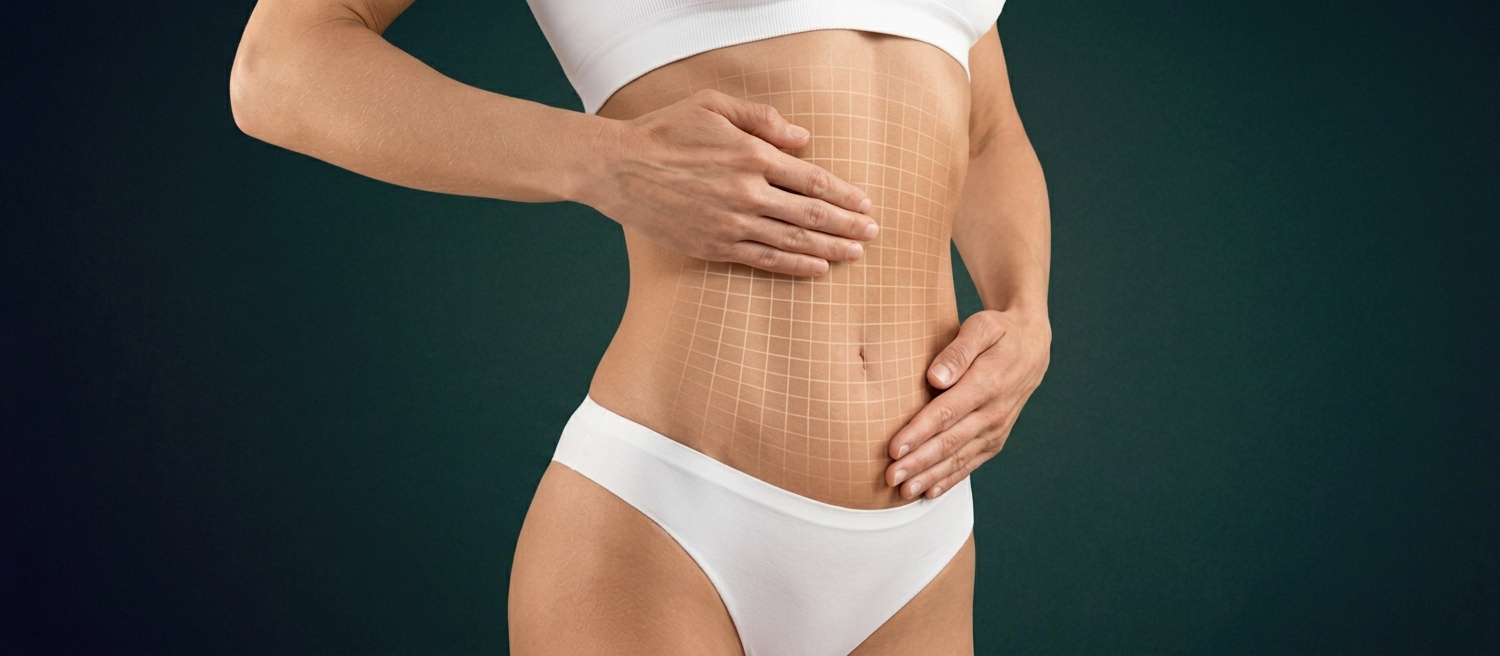
ABDOMINOPLASTY
IN DUBAI
Reshaping the abdominal contour through muscle support and skin refinement.
TUMMY TUCK SURGERY
Abdominoplasty improves abdominal contour by tightening weakened muscles and removing excess skin that often remains after pregnancy or weight change.
DR. IRAJ
overview
Abdominoplasty, commonly referred to as a tummy tuck, is a procedure designed to restore the shape and contour of the abdomen when excess skin and muscle laxity are present.
Changes in the abdominal wall commonly occur following pregnancy, weight fluctuations or the natural ageing process. These changes may include:
• loose or excess abdominal skin
• separation of the abdominal muscles
• loss of abdominal contour
• persistent skin laxity that cannot be improved with exercise
Abdominoplasty addresses these concerns by removing excess skin, repairing the abdominal muscles and reshaping the abdominal contour.
The goal is to restore shape, proportion and harmony with the body while maintaining a natural appearance.
Considering ABDOMINOPLASTY
Patients consider abdominoplasty when the abdomen no longer reflects their overall level of fitness or body shape.
Common situations include:
• abdominal skin laxity after pregnancy
• separation of the abdominal muscles (rectus diastasis)
• loose skin following weight loss
• persistent abdominal contour irregularities
While exercise strengthens the abdominal muscles, it cannot correct muscle separation or remove excess skin.
In these situations, surgery may be the most effective way to restore abdominal contour.
AT A GLANCE
Overnight Stay
O DAYS
Final Result
6 MONTHS
Anaesthetic
Duration
1-2 HRS
GENERAL
Surgical PLANNING
Careful planning is essential when performing abdominoplasty.
During consultation several factors are assessed including:
• the degree of skin laxity
• abdominal muscle separation
• distribution of fatty tissue
• skin elasticity
• body proportions
In most patients a full abdominoplasty provides the best opportunity to restore abdominal contour and muscle support.
surgeon insight
One of the most common misconceptions about abdominal contouring is that liposuction alone can correct loose skin. Liposuction removes fat, but it cannot tighten skin or repair muscle separation. When these issues are present, abdominoplasty is often required to achieve a natural result.
MUSCLE REPAIR
Pregnancy and weight changes frequently cause separation of the abdominal muscles, a condition known as rectus diastasis.
During abdominoplasty these muscles are routinely repaired to restore support to the abdominal wall.
This repair helps create a flatter abdominal contour while improving core stability
Liposuction and Body Contouring
Modern abdominoplasty often incorporates liposuction to refine surrounding contours.
In many cases liposuction of the flanks and surrounding areas is performed at the same time as the tummy tuck.
Dr Ahmadi commonly uses VASER technology, which allows more precise fat removal and contouring.
Combining liposuction with abdominoplasty helps restore a smooth transition between the abdomen and surrounding areas.
Surgical Technique
Abdominoplasty is typically performed under general anaesthesia.
The procedure involves:
• removal of excess abdominal skin
• repair of the abdominal muscles
• repositioning of the umbilicus (belly button)
• contouring of surrounding areas
The incision is placed low on the abdomen so that it can usually be concealed beneath underwear or swimwear.
A drainless closure technique is commonly used, which allows the abdominal tissues to heal without the need for surgical drains.
BEFORE AND AFTER
See before and after photos of a successful Abdominoplasty Surgery
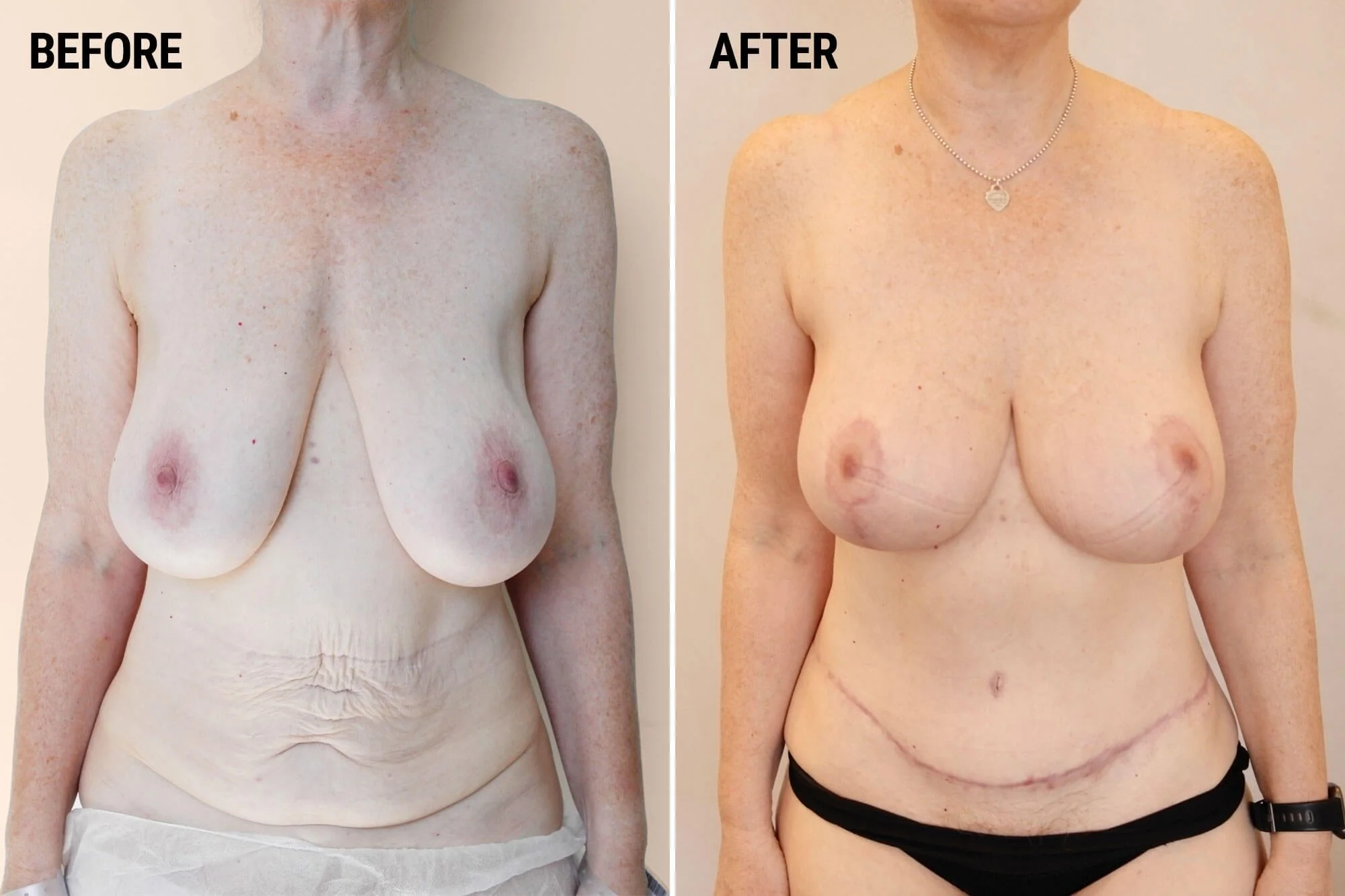
Side-by-side comparison photo showing a woman before and after breast surgery. The left image depicts her pre-surgery with sagging breasts, and the right image shows her post-surgery with surgically enhanced breasts and a visible surgical scar around her lower chest.
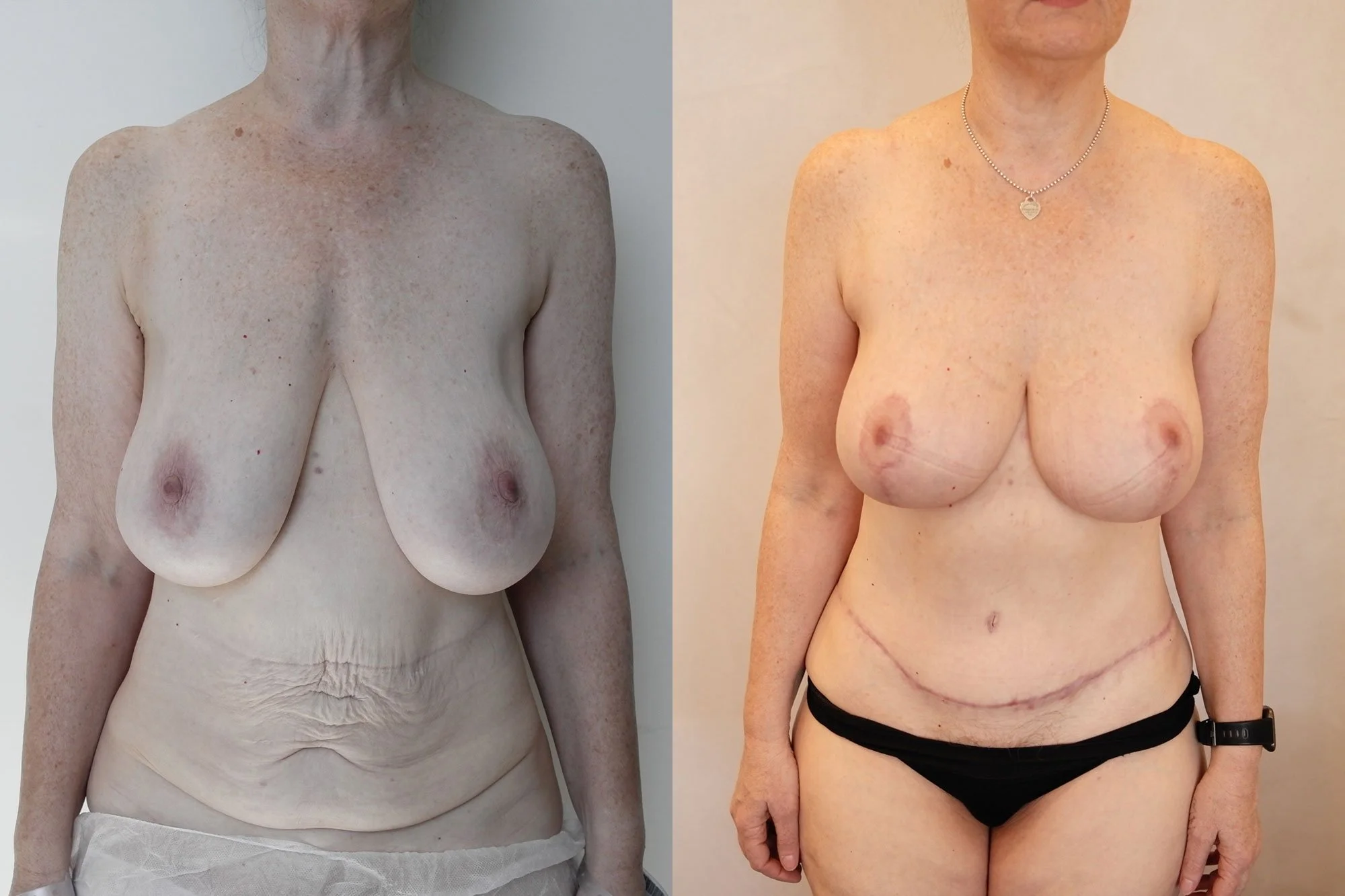
Comparison of a woman's torso before and after breast reconstruction surgery, showing changes in breast size and shape, and a visible surgical scar on the abdomen.
Recovery
Abdominoplasty is usually performed as a day procedure or overnight stay depending on individual circumstances.
Typical recovery milestones include:
• walking within the first day following surgery
• return to light activities within one to two weeks
• gradual return to exercise after several weeks
Compression garments are typically worn during early recovery to support healing tissues and reduce swelling.
As healing progresses the abdominal contour continues to refine.
Scarring
Abdominoplasty requires a surgical incision that is typically placed low on the abdomen so that it can usually be concealed beneath underwear or swimwear.
While scars generally improve significantly with time, the lower abdomen is an area where scars can occasionally widen or stretch during healing. This occurs because the abdominal skin is subject to tension as the body moves and heals.
For this reason, careful attention to post-operative scar management is important.
In some patients, adjunctive treatments such as laser therapy may be recommended during the healing process to help optimize scar appearance.
With appropriate care most scars gradually soften and fade over time.
Results
The results of abdominoplasty become more apparent as swelling settles during the weeks following surgery.
When muscle repair and skin tightening are combined, the abdomen often appears flatter and more proportionate.
Provided weight remains stable, the results are typically long lasting.
FAQs
-
Thigh lift surgery removes excess skin and soft tissue from the thighs to improve contour.
-
The cost of thigh lift surgery varies depending on the extent of skin removal required and whether liposuction is performed. A consultation allows a personalised surgical plan and quotation.
-
Patients with loose skin of the inner thighs, particularly following weight loss, may benefit from the procedure.
-
Liposuction removes fat but cannot correct significant skin laxity. When excess skin is present, a thigh lift may be required.
-
Scars may be placed in the groin crease, along the inner thigh or both depending on the pattern of excess skin.
-
Because of the anatomy and movement of the inner thighs, scars in this region can occasionally widen or stretch during healing.
-
Most patients return to light activities within several days and resume normal routines within one to two weeks.
-
Compression garments are commonly worn during early recovery to help support healing tissues.
-
Results are generally long lasting provided weight remains stable.
-
Yes. Thigh lift surgery is often performed as part of post-weight-loss body contouring alongside procedures such as arm reduction or body lift.
GET TO KNOW
DR. IRAJ.
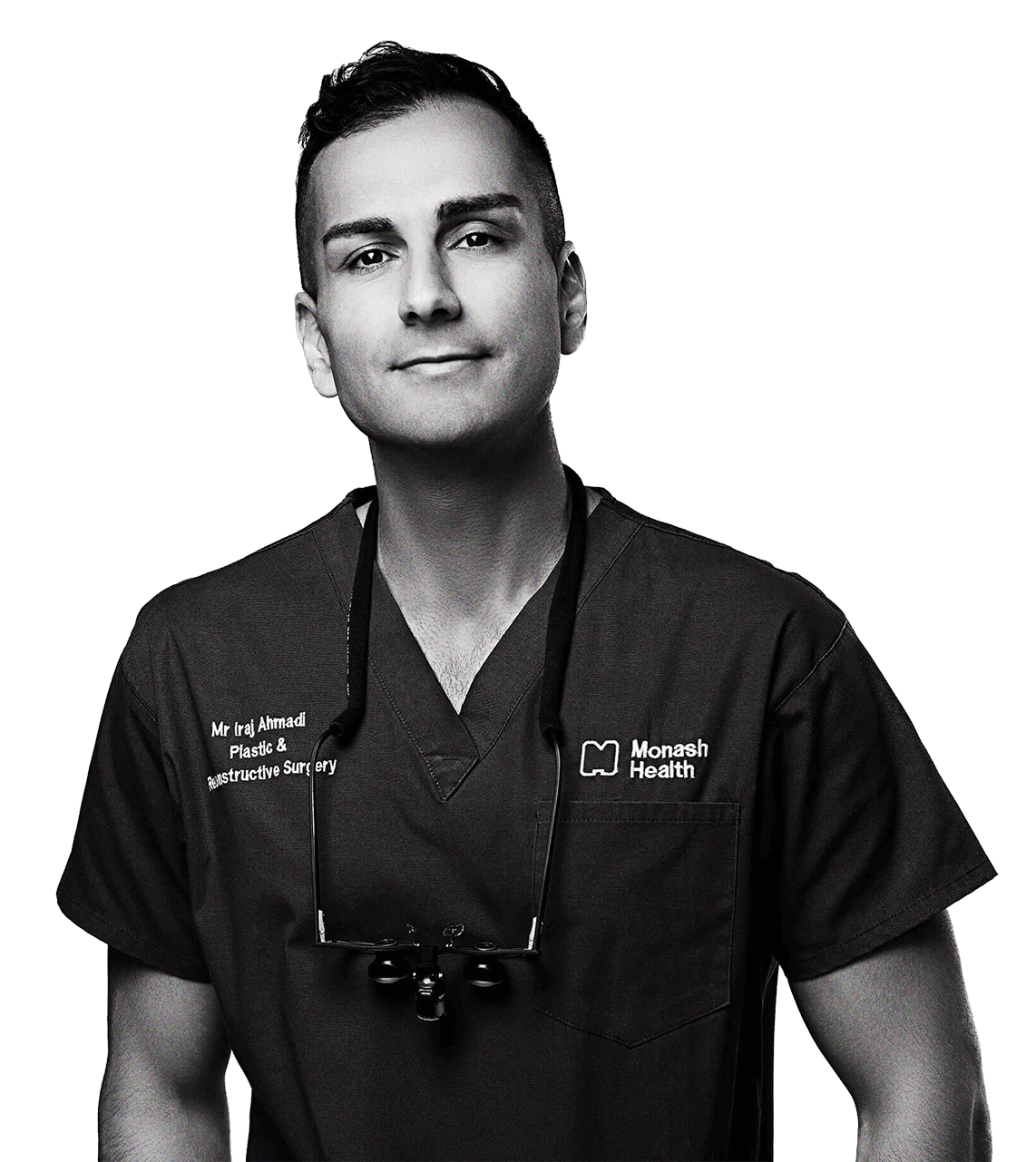
Dr Iraj Ahmadi is a specialist plastic and reconstructive surgeon whose work bridges aesthetic refinement and complex reconstructive surgery.
Alongside this work, his practice spans aesthetic surgery of the face and body as well as reconstructive surgery for cancer, trauma and complex tissue loss.
Related procedures
-
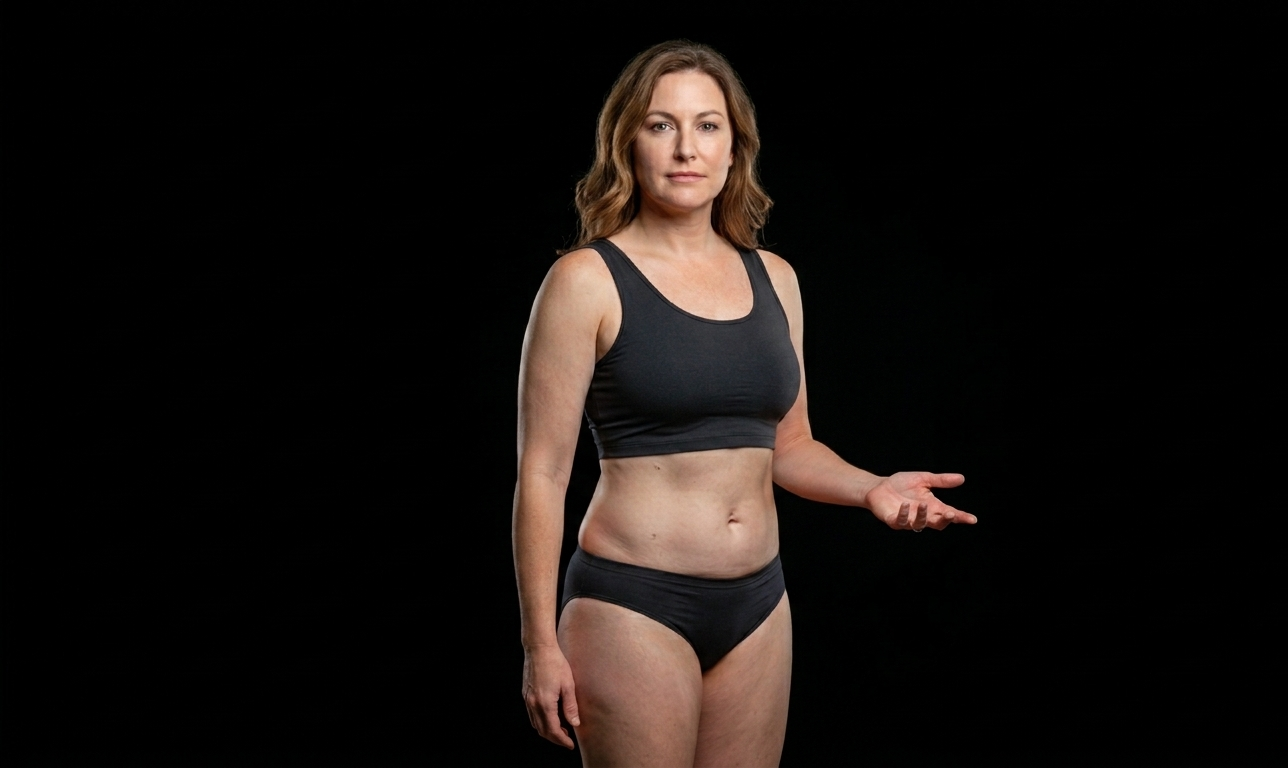
Liposuction
-
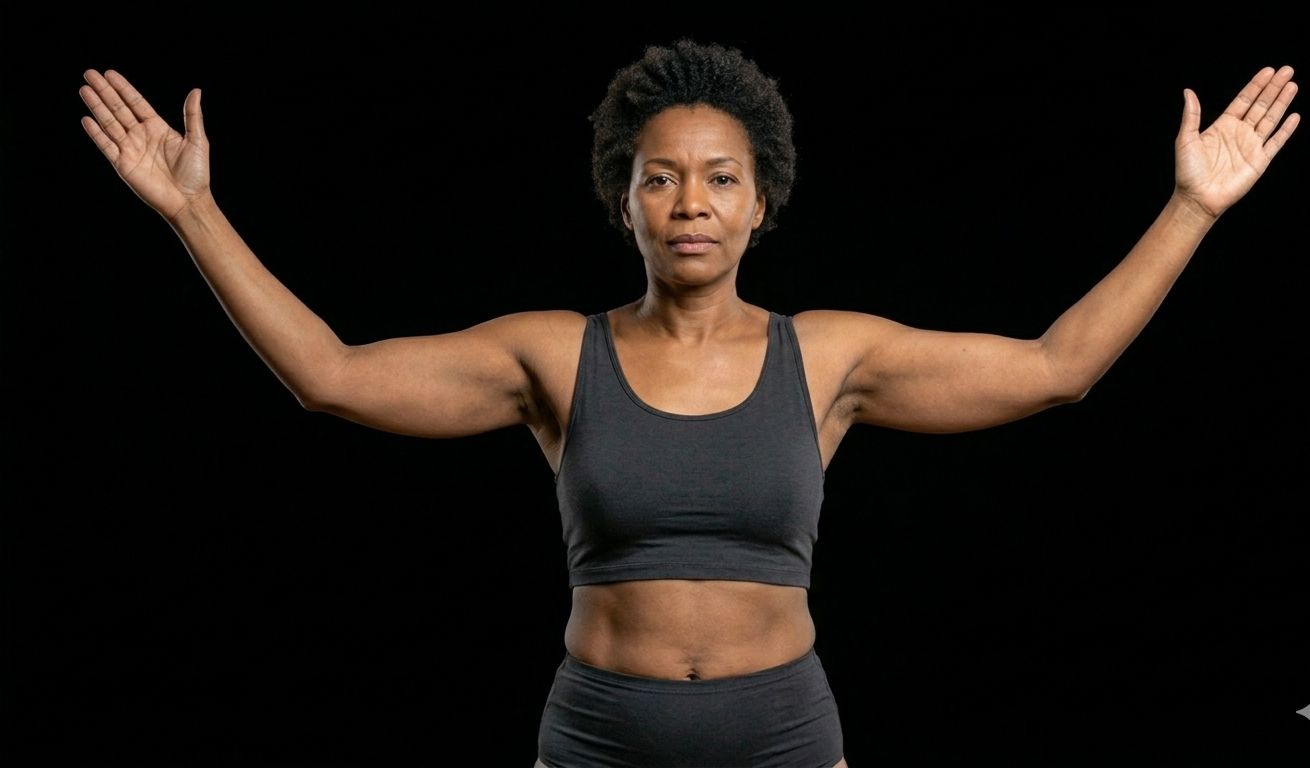
Brachioplasty
-

Labiaplasty
-

Body Lift