

BREAST
AUGMENTATION
IN DUBAI
Natural enhancement planned around proportion, shape and anatomical balance
BREAST AUGMENTATION WITH IMPLANTS
If you feel that your breasts are too small, uneven or not your desired shape, you can be a candidate for breast augmentation surgery. Breast Augmentation Surgery can either increase your breast size or restore breast volume lost over time
DR. IRAJ
overview
Breast augmentation is one of the most personal procedures in aesthetic surgery.
For many women the motivation is not simply to increase size. Often it is about restoring proportion, reclaiming balance within the body and feeling more comfortable in clothing or swimwear.
Pregnancy, breastfeeding, weight fluctuations and the natural ageing process can all influence breast volume and shape. For others the breast has always felt smaller than desired.
Modern breast augmentation focuses less on dramatic enlargement. The emphasis is on shape, proportion and harmony with the body.
When carefully planned the result should feel natural in appearance, balanced with the surrounding anatomy and appropriate for the individual patient.
surgeon insight
One of the most common misconceptions about breast augmentation is that implant size determines the final aesthetic. In reality chest width, breast tissue characteristics and skin elasticity play a far greater role in creating a natural result.
Considering Breast Augmentation
Women consider breast augmentation for a range of personal reasons.
Some wish to restore fullness that has softened following pregnancy or weight change. Others seek subtle enhancement that improves overall body proportion.
Common motivations include:
• naturally smaller breast volume
• loss of fullness following pregnancy or breastfeeding
• asymmetry between the breasts
• desire for improved body proportion
• feeling more confident in clothing and swimwear
A detailed assessment of chest width, tissue thickness, breast shape and skin quality allows the surgical plan to be tailored precisely.
The Consultation
The consultation is where aesthetic planning begins.
Rather than focusing solely on implant size, careful measurements are taken to understand how the breast relates to the chest wall, shoulders and overall body proportions.
Patients often arrive with a particular implant size in mind. While this can be helpful for discussion, the final recommendation is guided by anatomy.
Several factors are explored:
• implant size and projection
• implant placement relative to the chest muscle
• incision location
• the overall aesthetic goal
surgeon insight
A common scenario is when a patient arrives requesting a specific implant size because they have seen it used on a celebrity or friend. The reality is that a 300cc implant on one person may look completely different on another. The more patients understand that the implant must suit their own anatomy, the more likely they are to be happy with the final result.
Types of Breast Implants
In the UAE breast augmentation is performed using silicone gel implants.
Modern silicone implants contain a cohesive gel designed to maintain shape while remaining soft to the touch. Their texture closely resembles natural breast tissue, which contributes to a more natural appearance and movement.
-
Most implants used in breast augmentation are round implants, which can produce natural contours when appropriately selected.
-
Implants are also available in different projections. Some create subtle enhancement while others provide greater projection without increasing width.
Selecting the appropriate implant involves balancing implant dimensions with the patient’s anatomy.
surgeon insight
The best implant is rarely the largest implant. It is the implant that fits the patient’s anatomy.
AT A GLANCE
Overnight Stay
O DAYS
Final Result
6 MONTHS
Anaesthetic
Duration
1-2 HRS
GENERAL
Surgical Technique
Breast augmentation is typically performed under general anaesthesia.
A small incision is usually placed within the inframammary fold, the natural crease beneath the breast. This location allows precise implant placement while keeping scars discreet.
The implant pocket may be positioned:
• beneath the breast tissue
• partially beneath the chest muscle (dual-plane)
The optimal position depends on anatomical factors such as tissue thickness, breast shape and the patient’s lifestyle. Implant placement is therefore tailored to each individual.
In certain situations additional internal support may be used during breast surgery to reinforce the breast tissue.
Bioabsorbable scaffolds such as GalaFLEX® can provide temporary structural support while the body forms stronger connective tissue.
This may be considered in procedures such as:
• augmentation-mastopexy, where implants and breast lifting are performed together
• revision breast augmentation
• patients with weaker natural tissue support
The scaffold gradually integrates with the body and is absorbed over time.
BEFORE AND AFTER
See before and after photos of a successful Breast Augmentation Surgery.
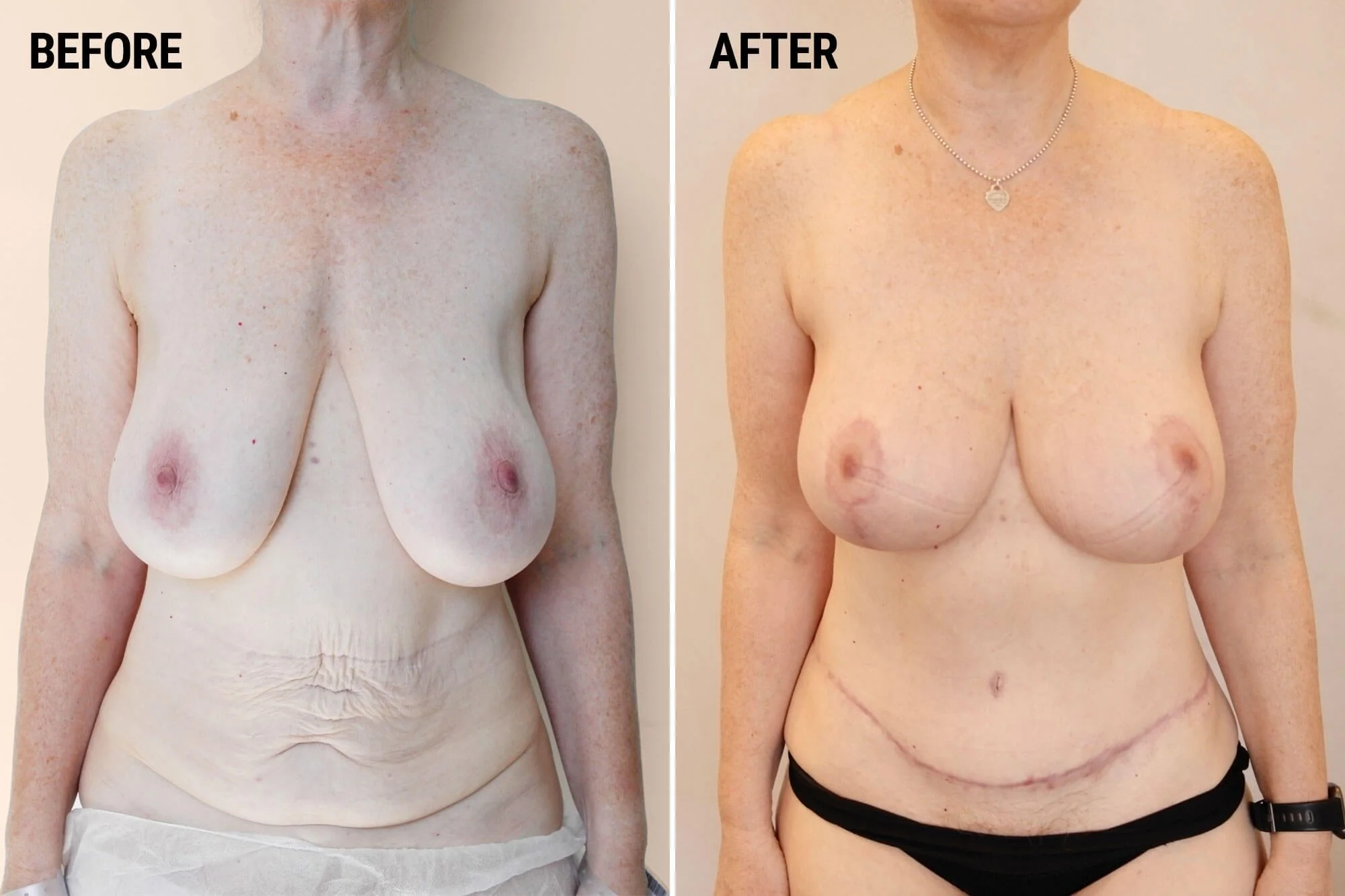
Comparison of a woman's chest before and after breast surgery, showing significant changes and scars.
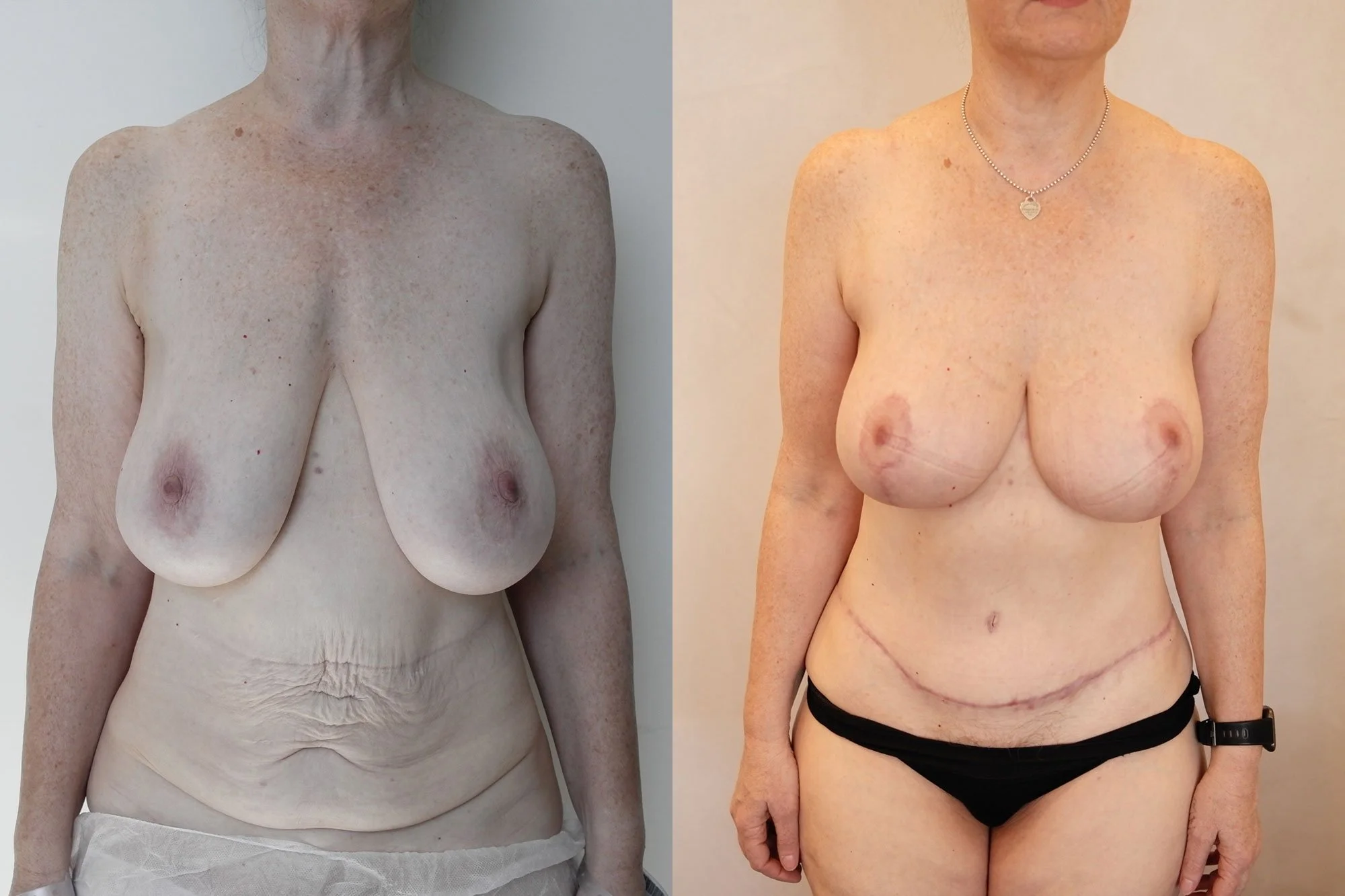
Comparison of a woman's body before and after breast reconstruction surgery, showing changes in breast appearance, scars, and overall body contour.
Recovery
Breast augmentation is usually performed as a day procedure, allowing patients to return home the same day.
Recovery typically involves mild swelling and temporary tightness across the chest during the first few days.
Many patients are able to:
• return to light activities within several days
• resume most normal routines within one to two weeks
• avoid strenuous exercise for approximately four weeks
Modern surgical techniques aim to minimise tissue trauma and support a smooth recovery. Approaches such as minimal-touch implant insertion and rapid recovery protocols may be used to help reduce discomfort and promote healing.
PLANNING NATURAL PROPORTION
Breast augmentation is rarely about simply increasing size.
The goal is to create balance between the breasts and the rest of the body. Chest width, shoulder line, waist proportion and tissue characteristics all influence what implant dimensions will appear natural.
When the implant fits the anatomy rather than dominating it, the result appears effortless.
surgeon insight
The most successful breast augmentations are rarely the most obvious. The implant should complement the patient’s natural anatomy rather than overpower it.
Risks and Safety
Breast augmentation is a surgical procedure. A detailed discussion of risks and safety considerations forms an important part of the consultation process.
Comprehensive consent information can be reviewed here.
Results
Breast augmentation results evolve gradually as healing progresses.
Swelling settles over several weeks while the implants soften and adapt to the surrounding tissue.
When carefully planned the outcome should feel balanced with the patient’s natural proportions. Many patients describe the change as subtle refinement rather than dramatic transformation.
FAQs
-
Modern silicone implants are designed to be durable medical devices. Many patients keep their implants for well over ten years, though replacement may eventually be required.
-
Implant size is determined through measurements taken during consultation. Chest width, tissue thickness and breast shape all influence the appropriate implant size.
-
When implant size and profile are selected in harmony with the patient’s anatomy the results can appear very natural.
-
Most patients experience mild to moderate discomfort during the first few days after surgery. This is typically well controlled with medication.
-
Light activities can usually resume within several days. Many patients return to most normal routines within one to two weeks.
-
Implants gradually soften and settle during the first several weeks following surgery. Final shape usually becomes apparent after two to three months.
-
Many women retain the ability to breastfeed following breast augmentation, though this cannot be guaranteed.
-
Breast implants do not prevent mammography. Special imaging techniques allow breast tissue to be visualised effectively.
-
Implant rupture is uncommon. Modern silicone implants contain cohesive gel designed to remain within the implant shell if rupture occurs.
-
Extensive research has not demonstrated a definitive causal link between breast implants and systemic illness, though ongoing research continues to evaluate this area.
-
Incisions are typically placed within the natural breast crease, where scars usually fade significantly over time.
-
Yes. In patients where the breast has lost both volume and position, breast augmentation may be combined with a breast lift to restore both fullness and shape.
GET TO KNOW
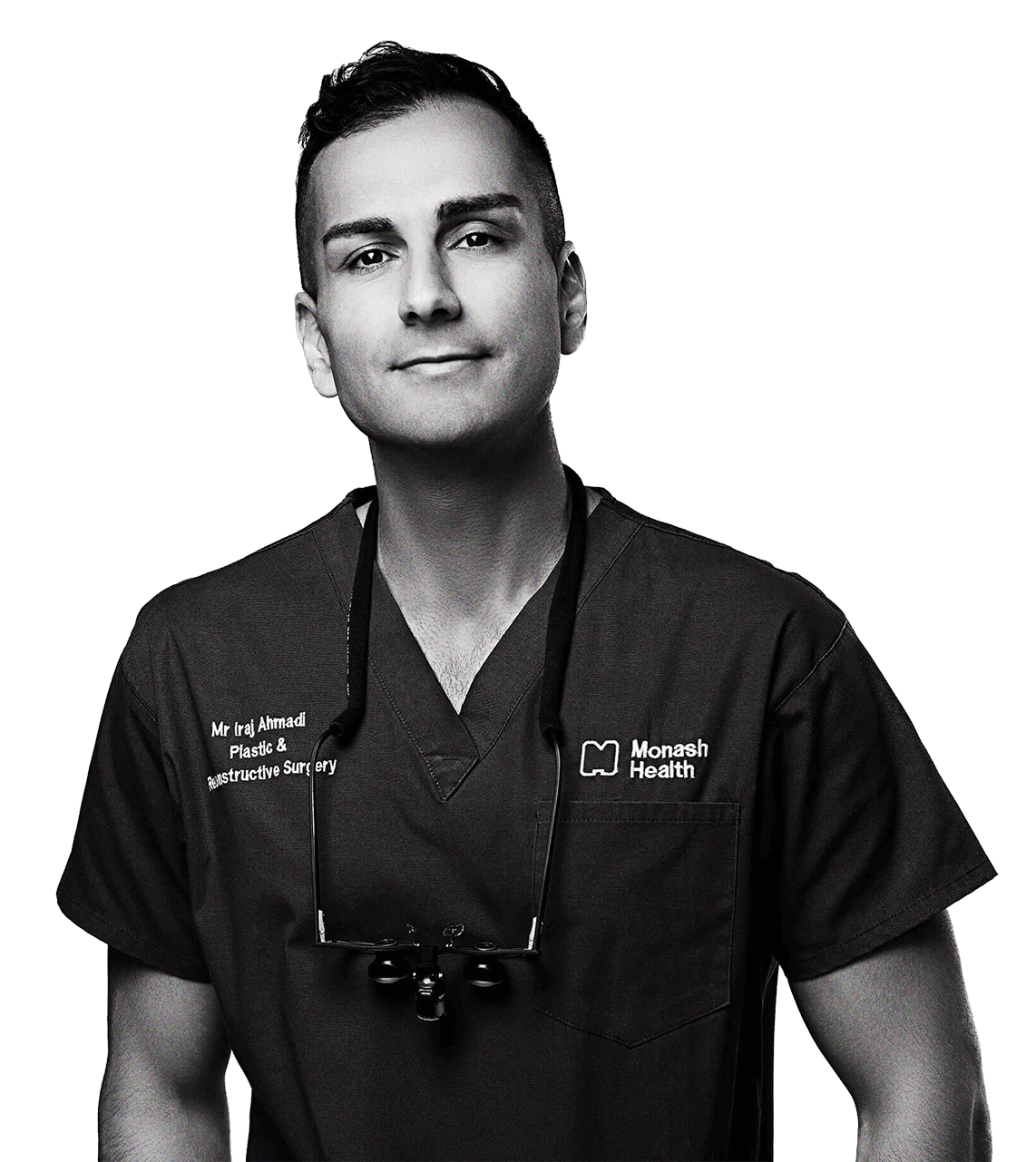
DR. IRAJ.
Dr Iraj Ahmadi is a specialist plastic and reconstructive surgeon whose work bridges aesthetic refinement and complex reconstructive surgery.
Alongside this work, his practice spans aesthetic surgery of the face and body as well as reconstructive surgery for cancer, trauma and complex tissue loss.
Related procedures
-

Breast Lift
-
Breast Reduction
-

Breast Implant Removal