
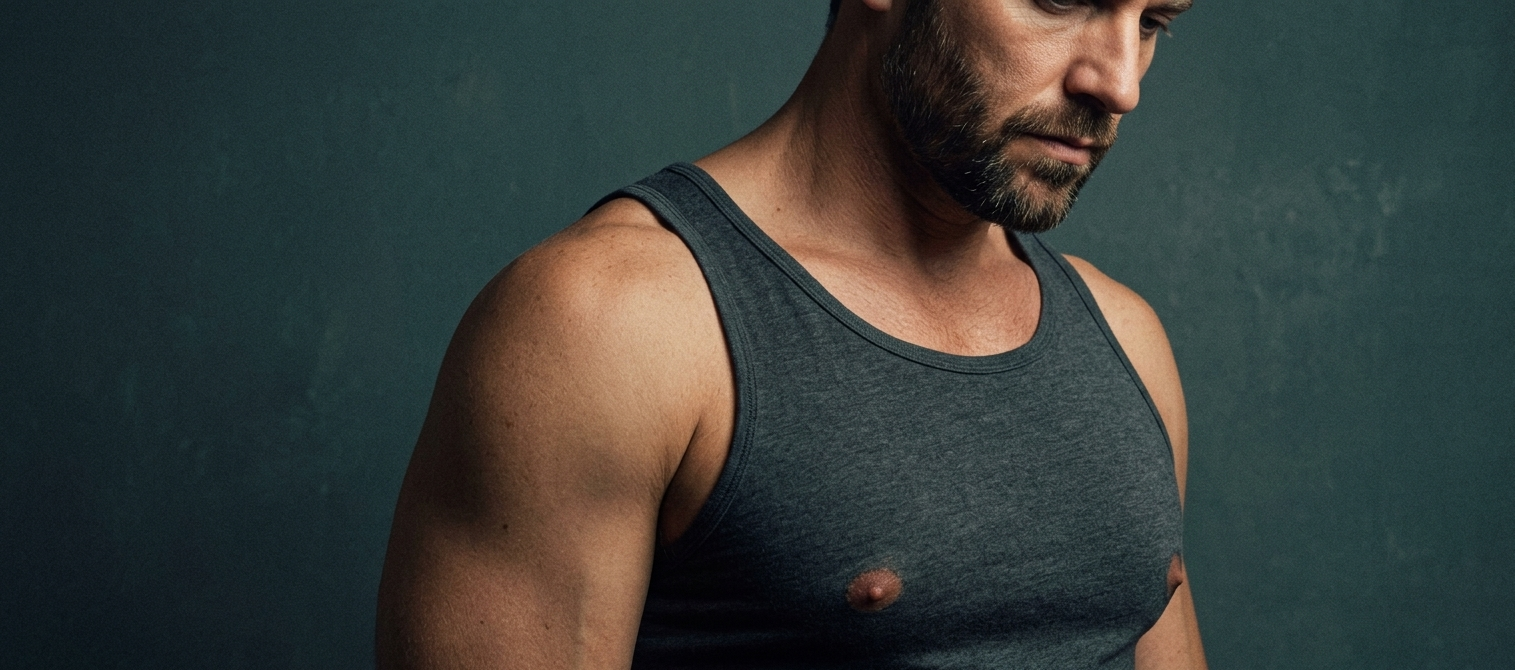
GYNECOMASTIA
in dubai
Refining male chest contour through precise reduction of glandular fullness.
MALE CHEST REDUCTION SURGERY
Gynecomastia surgery reduces excess glandular tissue and chest fullness to create a flatter, more defined masculine chest contour.
DR. IRAJ
overview
Gynecomastia refers to enlargement of male breast tissue, which can create a fuller or more rounded appearance of the chest.
This condition is relatively common and may occur during adolescence or adulthood. While exercise can improve overall body composition, true gynecomastia often involves excess glandular tissue that cannot be corrected through weight loss or training alone.
Gynecomastia surgery reshapes the chest by removing excess gland and, when necessary, reducing excess fat and skin. The goal is to restore a flatter, more masculine chest contour that appears natural in proportion with the rest of the body.
Considering GYNECOMASTIA
Men consider gynecomastia surgery for a variety of reasons.
Common concerns include:
• persistent chest fullness despite exercise
• asymmetry of the chest
• prominence of the nipple area
• difficulty wearing fitted clothing
• self-consciousness in situations such as swimming or the gym
The condition may involve:
• excess glandular tissue
• excess fat
• excess skin
• or a combination of these factors
Careful assessment determines the most appropriate surgical approach.
surgeon insight
The best implant is rarely the largest implant. It is the implant that fits the patient’s anatomy.
AT A GLANCE
Overnight Stay
O DAYS
Final Result
6 MONTHS
Anaesthetic
Duration
1-2 HRS
GENERAL
Surgical PLANNING
Every case of gynecomastia is slightly different.
The surgical plan depends on several factors including:
• the amount of glandular tissue present
• the degree of fatty tissue
• skin quality and elasticity
• the presence of excess skin
In many patients with mild to moderate gynecomastia, a combination of liposuction and gland excision provides an excellent result.
More advanced cases with significant skin excess may require additional skin tightening or excision to restore a natural chest contour.
BEFORE AND AFTER
See before and after photos of a successful Gynecomastia Surgery.
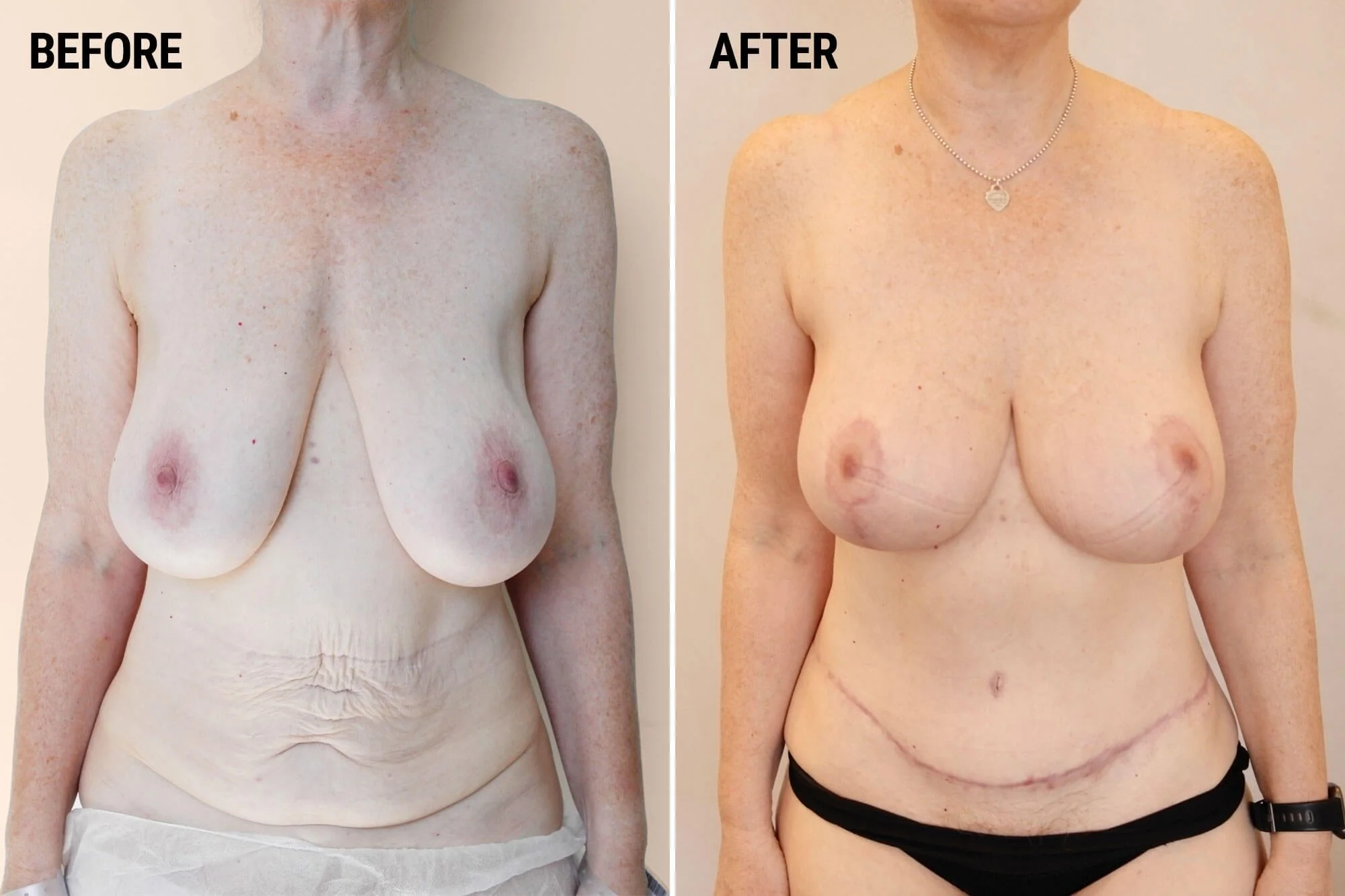
Side-by-side comparison of a woman before and after breast surgery, showing changes in breast size and shape, with visible surgical scars after the procedure.
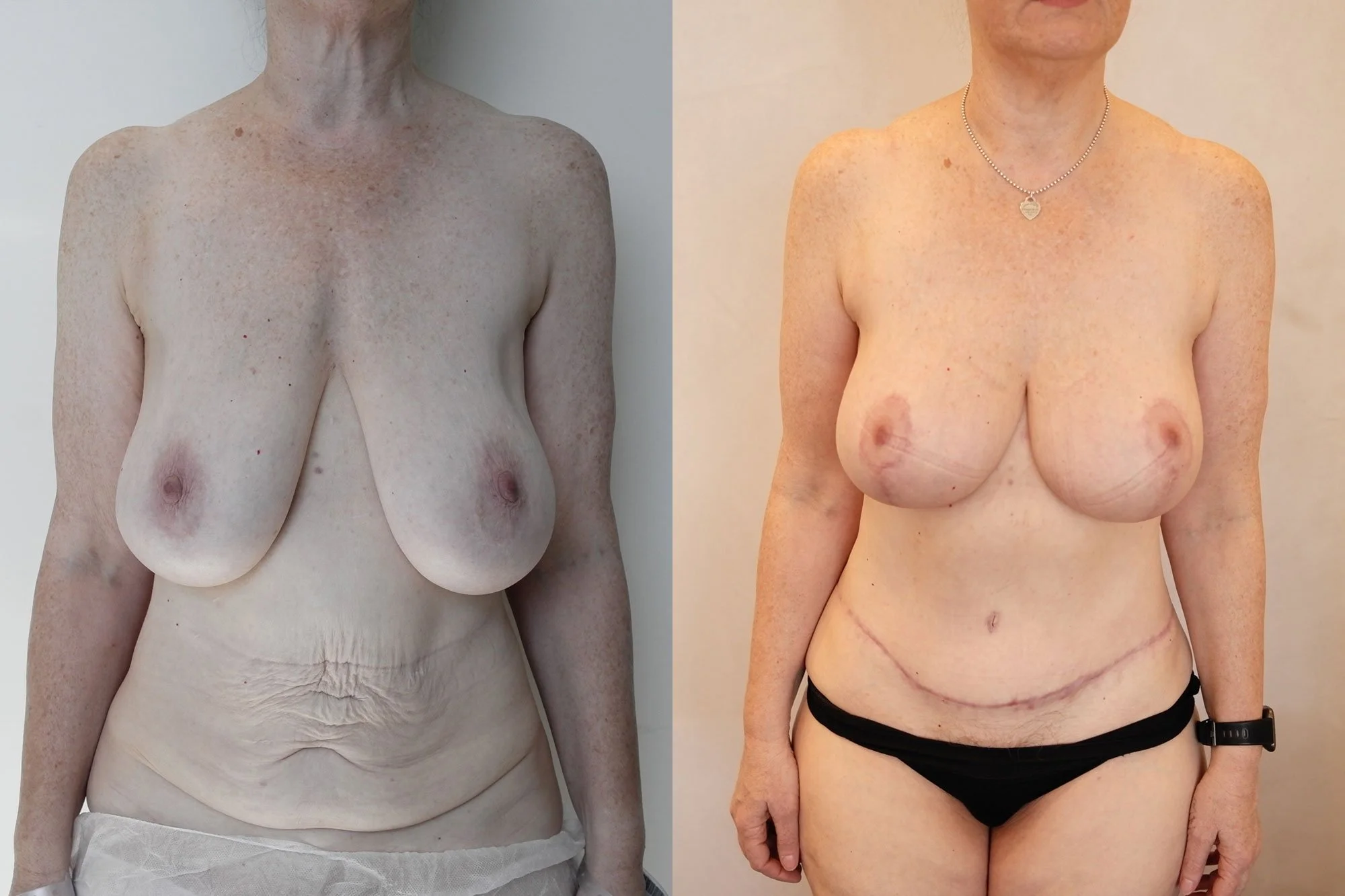
Before and after photos of a woman showing her chest and abdomen, with the after image displaying surgical scars and changes from a medical procedure.
Surgical technique
Gynecomastia surgery is typically performed under general anaesthesia.
The procedure often involves two key steps.
Liposuction
Liposuction is used to remove excess fatty tissue and contour the surrounding chest. In most cases Dr Ahmadi performs ultrasound-assisted liposuction using VASER technology, which helps separate fat from surrounding tissue and allows more precise contouring.
Gland Removal
True gynecomastia frequently involves firm glandular tissue beneath the nipple that cannot be removed through liposuction alone. This tissue is carefully excised through a small incision at the edge of the areola.
The incision is placed along the natural border of the areola, where it usually heals extremely well and becomes very difficult to see.
surgeon insight
One of the most common misconceptions about gynecomastia surgery is that liposuction alone will solve the problem. When gland tissue or excess skin is present, removing fat alone will not produce a natural result. Careful surgical planning is essential.
Recovery
Gynecomastia surgery is typically performed as a day procedure and most patients return home the same day.
Typical recovery milestones include:
• light daily activities within several days
• return to most normal routines within one to two weeks
• avoidance of strenuous chest exercise for several weeks
A compression garment is usually worn for approximately six weeks following surgery. This helps support the healing tissues, reduce swelling and optimize the final chest contour.
As swelling settles over the following weeks, the chest gradually assumes its final shape.
Scarring
In most cases the incision is placed along the edge of the areola.
This location allows the scar to blend with the natural colour change between the areola and surrounding skin. Once healed, the scar is usually very difficult to see.
Results
As swelling settles the chest gradually assumes a flatter and more defined contour.
When carefully planned, gynecomastia surgery restores a chest shape that appears natural and proportionate with the body.
The results are typically long-lasting provided weight remains stable.
FAQs
-
Gynecomastia can result from hormonal changes, genetics, certain medications or weight fluctuations.
-
Exercise can reduce body fat, but glandular breast tissue usually cannot be eliminated without surgery.
-
The results are generally long lasting, particularly when weight remains stable.
-
Incisions are usually placed along the border of the areola, where scars typically become very difficult to see once healed.
-
Liposuction alone may be appropriate in some cases, though many patients require removal of glandular tissue as well.
-
Most patients return to light activities within several days and resume normal routines within one to two weeks.
-
When carefully planned, the goal of surgery is to create a chest contour that appears natural and proportionate.
-
Gynecomastia surgery is usually performed as a day procedure.
GET TO KNOW
DR. IRAJ.
Dr Iraj Ahmadi is a specialist plastic and reconstructive surgeon whose work bridges aesthetic refinement and complex reconstructive surgery.
Alongside this work, his practice spans aesthetic surgery of the face and body as well as reconstructive surgery for cancer, trauma and complex tissue loss.

Related procedures
-

Liposuction
-

Body Lift
-
ABDOMINOPLASTY