

EYELID SURGERY
IN DUBAI
Refreshing the eye area by reducing heaviness and restoring natural definition.
EYELID CONTOURING SURGERY
Eyelid surgery removes excess skin or puffiness around the eyes to improve definition and reduce a tired appearance.
DR. IRAJ
overview
Eyelid surgery, also known as blepharoplasty, is a procedure designed to restore a more refreshed appearance to the eyes by addressing excess skin, muscle laxity and changes in the surrounding tissues.
Ageing of the eyelids commonly involves:
• excess skin of the upper eyelids
• puffiness or fullness of the lower eyelids
• changes in the surrounding soft tissues
• heaviness around the eyes that creates a tired appearance
Blepharoplasty reshapes the eyelids by removing excess skin and adjusting the underlying tissues while preserving the natural contours of the eye.
The goal is to restore shape, proportion and harmony with the surrounding facial features while maintaining a natural appearance.
Considering Eyelid Surgery
Patients often consider eyelid surgery when they notice:
• excess upper eyelid skin
• heaviness of the upper eyelids
• puffiness beneath the eyes
• a tired or aged appearance around the eyes
Upper eyelid surgery is one of the most commonly performed facial procedures because changes in this area can strongly influence how rested or alert the face appears.
Eyelids and Brow Position
An important factor when assessing the upper eyelids is the position of the brow.
In many patients the appearance of excess eyelid skin is influenced by changes in brow position over time, which allow additional skin to fold into the upper eyelid.
For this reason, careful evaluation of the brow is an important part of eyelid surgery planning.
In some patients addressing the brow position may also be required to achieve the most balanced result.
Revised Surgeon Perspective
A common misconception is that excess upper eyelid skin is always caused by the eyelid itself. In many patients the appearance of excess skin is influenced by a lowering of the brow over time, which contributes to heaviness of the upper eyelid.
Upper Eyelid Surgery
Upper blepharoplasty focuses on removing excess skin and adjusting the underlying tissues of the upper eyelid.
The incision is typically placed within the natural eyelid crease so that it becomes difficult to see once healed.
Removing excess skin can improve the appearance of heaviness around the eyes while preserving the natural contour of the eyelid.
Lower Eyelid Surgery
Lower eyelid surgery addresses puffiness or fullness beneath the eyes.
In many cases this is caused by fat that has shifted forward over time.
Rather than simply removing fat, modern eyelid surgery often involves repositioning the fat to restore smoother transitions between the lower eyelid and cheek.
When appropriate this can be performed through a transconjunctival approach, which places the incision inside the eyelid and avoids an external scar.
Fat Repositioning and Volume
Loss of facial volume is an important contributor to ageing around the eyes.
In some patients’ fat can be repositioned or supplemented with fat grafting to restore volume and improve the transition between the lower eyelid and cheek.
This approach helps maintain a natural appearance while avoiding an overly hollow or surgical look.
Anaesthesia
Blepharoplasty can be performed under local anesthesia, with or without sedation, in patients who are comfortable with this approach.
In other situations, general anesthesia may be used depending on the extent of the procedure and patient preference.
AT A GLANCE
Overnight Stay
O DAYS
Final Result
6 MONTHS
Anaesthetic
Duration
1-2 HRS
GENERAL
BEFORE AND AFTER
See before and after photos of a successful Eyelid Surgery.
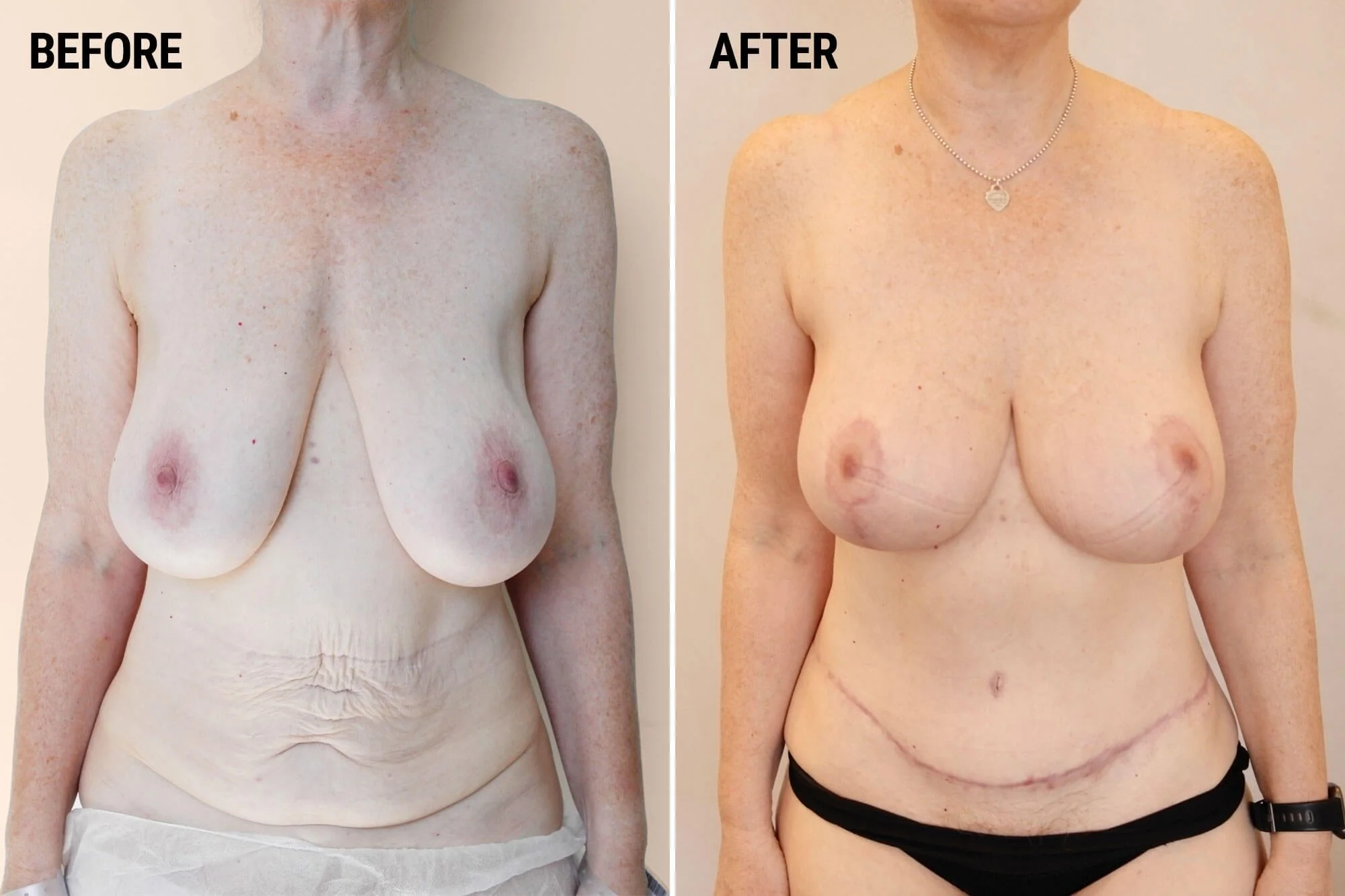
Side-by-side comparison of a woman's chest before and after breast surgery, showing significant changes in breast shape and size, with visible surgical scars in the after image.
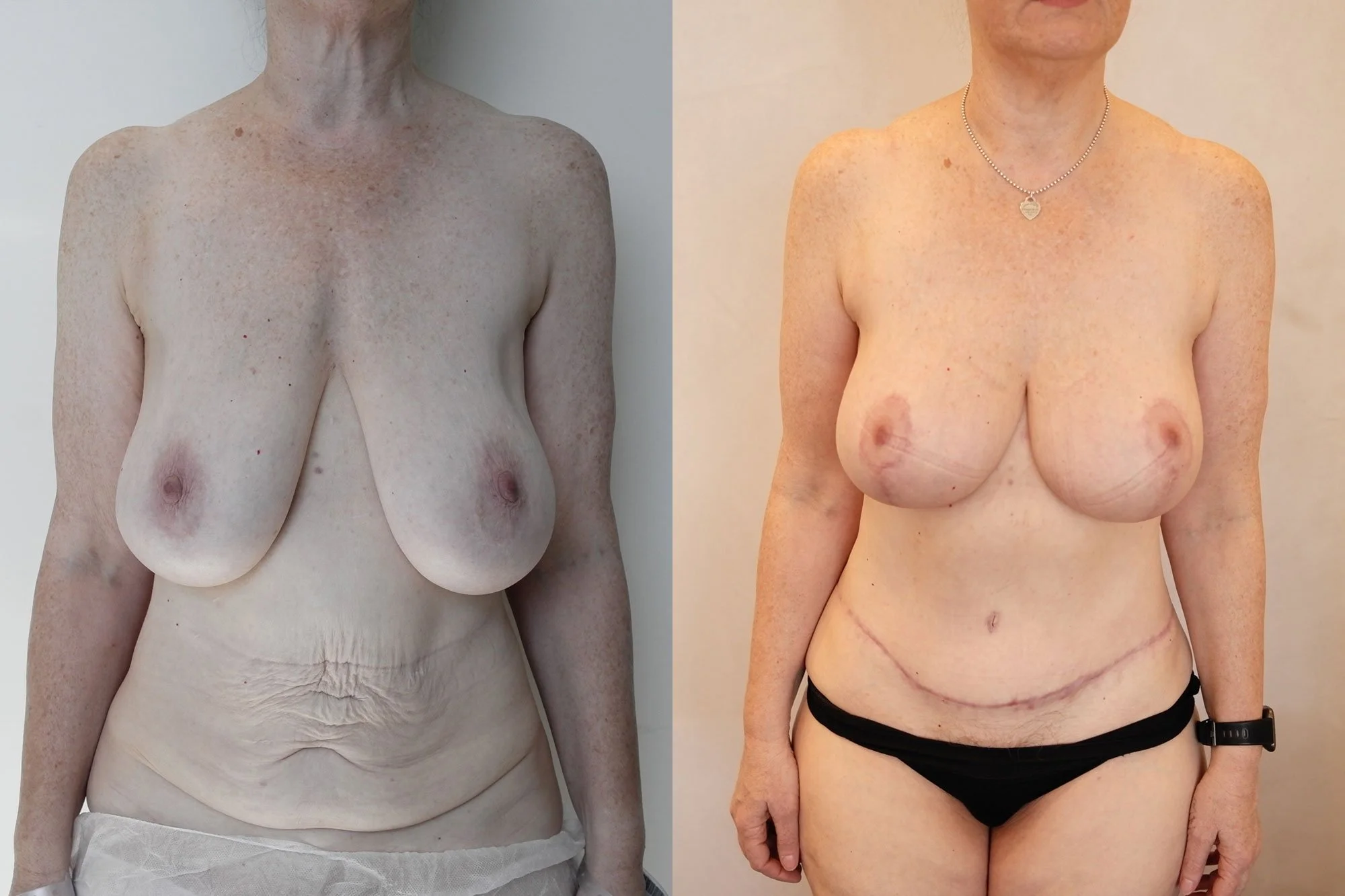
Side-by-side comparison of a woman before and after breast surgery, with visible scars and surgical changes.
Recovery
Recovery following eyelid surgery is usually straightforward.
Typical recovery milestones include:
• swelling and bruising during the first several days
• gradual return to light activities within one week
• progressive improvement in eyelid contour as healing continues
As swelling settles the eyes gradually appear more refreshed.
Results
Blepharoplasty restores a more rested appearance by improving the contour of the eyelids and surrounding tissues.
When carefully planned the result should appear natural and harmonious with the rest of the face.
The aim is not to change the eyes, but to restore a refreshed appearance while preserving natural facial expression.
FAQs
-
Blepharoplasty is a surgical procedure that improves the appearance of the eyelids by removing excess skin and adjusting underlying tissues.
-
The cost of eyelid surgery varies depending on whether the upper eyelids, lower eyelids or both are treated. A consultation allows a personalised treatment plan.
-
Patients who have excess eyelid skin, puffiness beneath the eyes or heaviness of the eyelids may benefit from blepharoplasty.
-
Yes. Many eyelid procedures can be performed under local anaesthesia when patients are comfortable with this approach.
-
Upper eyelid incisions are typically placed within the natural eyelid crease, while lower eyelid surgery may be performed through a transconjunctival approach that leaves no visible external scar.
-
Fillers may improve volume loss in selected cases, though they cannot remove excess eyelid skin.
-
Most patients return to light activities within about one week as swelling gradually improves.
-
Results are generally long lasting, though the natural ageing process continues over time.
-
Yes. Eyelid surgery is often combined with procedures such as facelift, neck lift or brow lift to improve overall facial balance.
-
Blepharoplasty improves excess skin and contour of the eyelids, though fine wrinkles may require additional skin treatments.
GET TO KNOW
DR. IRAJ.
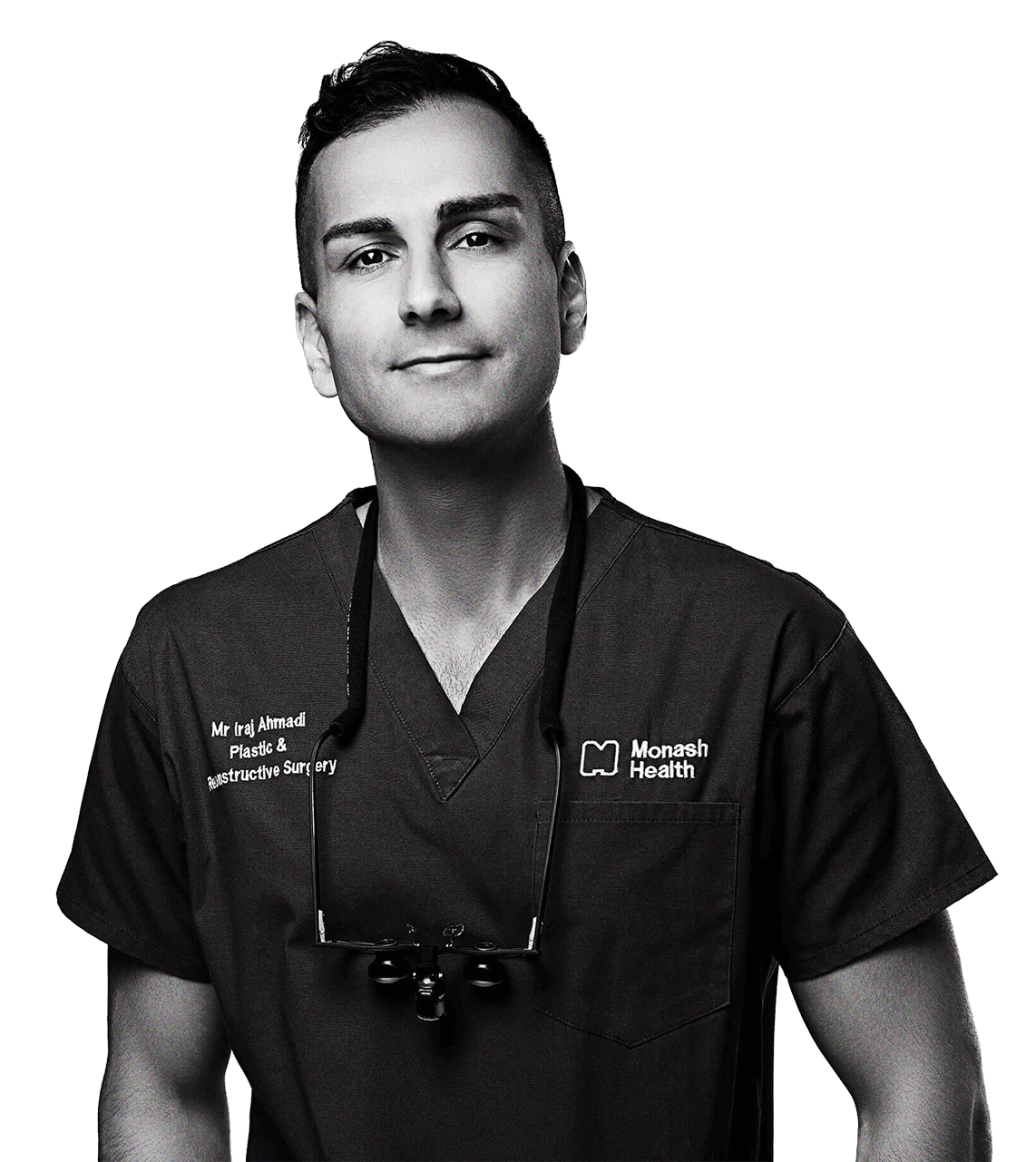
Dr Iraj Ahmadi is a specialist plastic and reconstructive surgeon whose work bridges aesthetic refinement and complex reconstructive surgery.
Alongside this work, his practice spans aesthetic surgery of the face and body as well as reconstructive surgery for cancer, trauma and complex tissue loss.
Related procedures
-

Facelift
-

Neck Lift
-

Brow Lift
-

Facial Fat Grafting