

FACIAL FAT
GRAFTING
IN DUBAI
Restoring facial volume using natural tissue for soft structural enhancement.
Facial Volume Restoration with Fat Transfer
Facial fat grafting uses natural tissue to restore volume in areas where the face has gradually lost softness or support.
DR. IRAJ
overview
Facial fat grafting is a procedure designed to restore volume and improve the quality of the facial soft tissues using a patient’s own fat.
Ageing of the face is not only related to skin laxity. Over time the face also experiences loss of volume, which contributes to hollow areas and changes in facial contour.
Fat grafting restores this lost volume by transferring small amounts of fat from another part of the body to carefully selected areas of the face.
The aim is to restore shape, proportion and harmony with the surrounding facial features while maintaining a natural appearance.
Facial Ageing and Volume Loss
Volume loss is one of the earliest signs of facial ageing.
Patients may notice:
• hollowing beneath the eyes
• flattening of the cheeks
• loss of fullness around the temples
• changes in facial contour
These changes can occur even before significant skin laxity develops.
For many patients in their mid-30s to 40s, restoring facial volume can improve facial balance without the need for facelift surgery.
When Fat Grafting May Be Considered
Facial fat grafting is commonly used in two situations.
Early facial ageing
Patients with early signs of ageing may experience volume loss and subtle changes in tissue quality but may not yet have significant skin laxity.
In these cases, fat grafting can restore volume and improve the quality of the facial soft tissues.
Facial rejuvenation surgery
Fat grafting is also commonly performed in combination with facelift surgery to restore volume while repositioning the deeper facial structures.
Addressing both tissue position and volume helps achieve a more balanced and natural result.
Regenerative Properties of Fat
Fat tissue contains a rich population of regenerative cells, including pluripotential stem cells, which contribute to the health of surrounding tissues.
Because of these regenerative properties, fat grafting may improve the quality and texture of the skin in addition to restoring volume.
For this reason, fat grafting is often considered a natural method of facial rejuvenation.
surgeon insight
Fat grafting acts as a natural filler while also contributing to the health of the surrounding tissues. However, the fat that survives behaves like normal body fat and can change with weight fluctuations.
Fat Harvesting and Transfer
Fat grafting involves three main steps:
1. harvesting fat from another area of the body
2. preparing the fat for transfer
3. placing small amounts of fat into carefully selected areas of the face
Fat is most commonly harvested from the abdomen, where it can be obtained using gentle liposuction techniques.
Once prepared, small amounts of fat are placed into the facial tissues in a way that restores natural contour.
Anaesthesia
Facial fat grafting can often be performed under local anesthesia, with or without light sedation depending on the extent of the procedure and patient preference.
When performed as a standalone procedure, many patients are comfortable having the treatment under local anesthesia. When fat grafting is combined with procedures such as facelift or eyelid surgery, general anesthesia may be used as part of the overall surgical plan.
Longevity of Fat Grafting
A portion of the transferred fat establishes a blood supply and becomes permanent.
Because the fat behaves like normal body tissue, it can respond to changes in body weight over time.
For this reason fat grafting is best suited for patients whose weight is relatively stable.
AT A GLANCE
Overnight Stay
O DAYS
Final Result
6 MONTHS
Anaesthetic
Duration
1-2 HRS
GENERAL
BEFORE AND AFTER
See before and after photos of a successful Facial Fat Grafting Surgery.
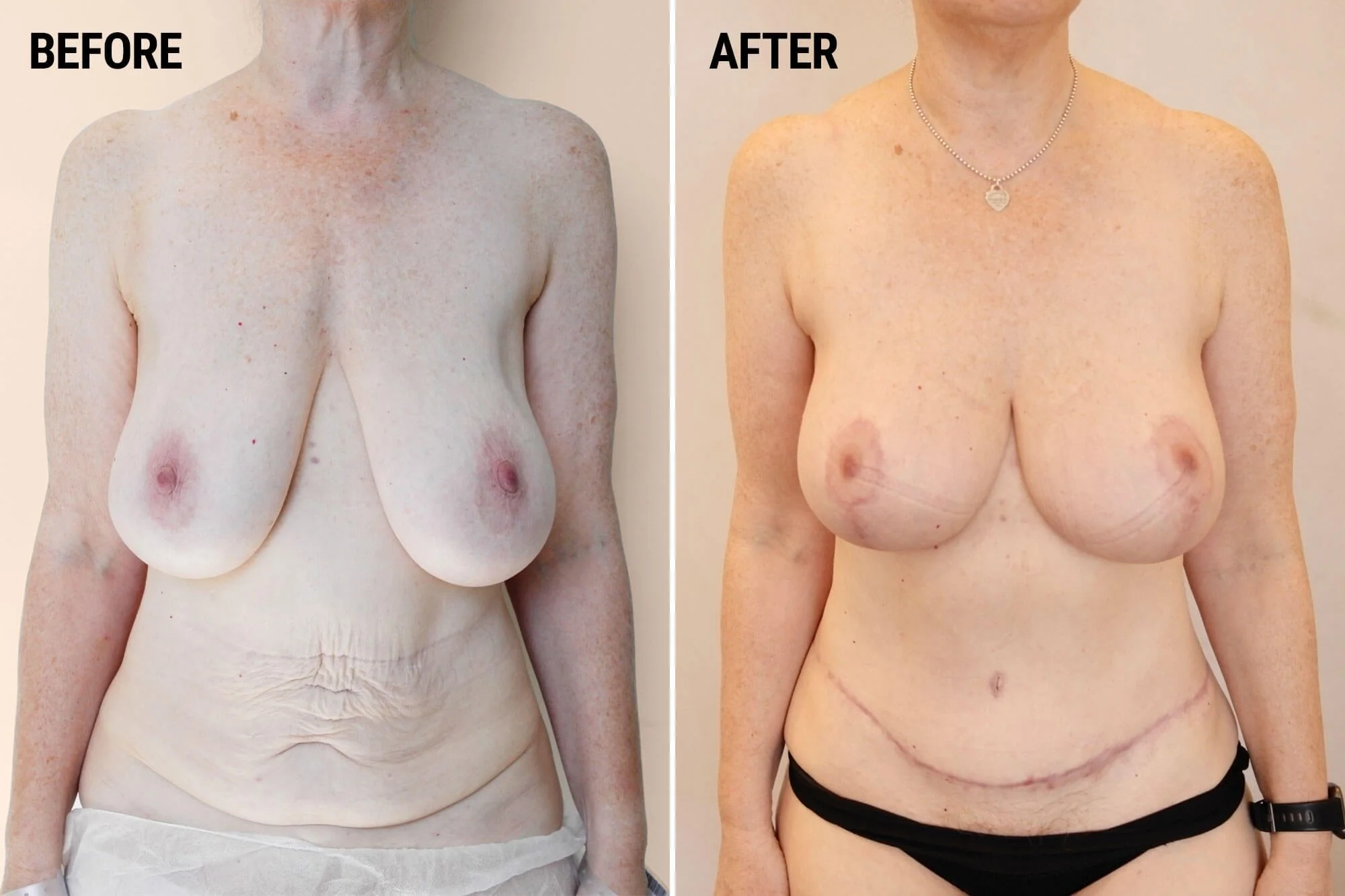
Comparison of a woman before and after breast surgery. In the 'before' image, her breasts are sagging with stretched skin, and in the 'after' image, her breasts are lifted and more firm with a surgical scar visible under the breasts.
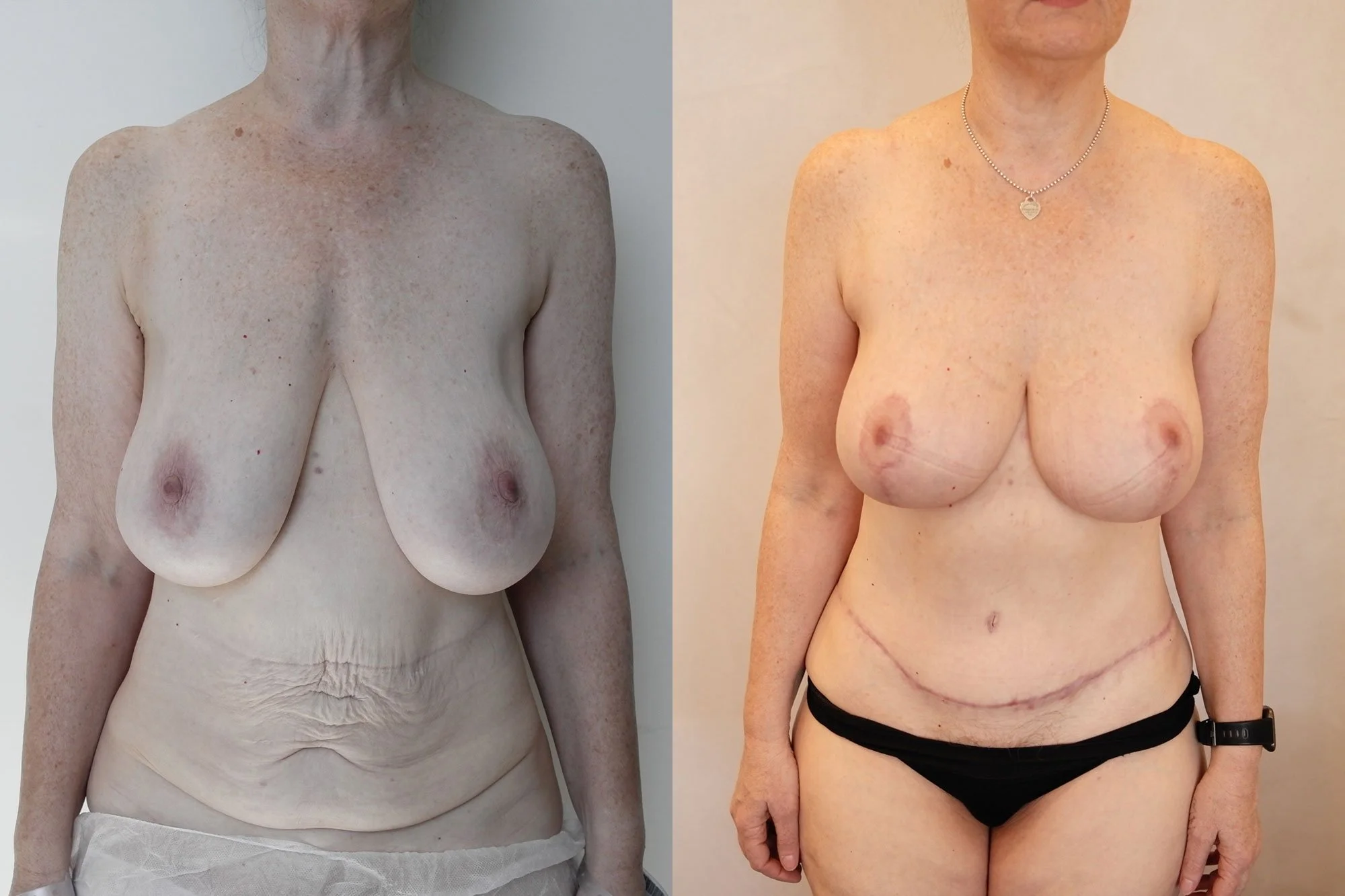
Before and after images of a woman showing the results of breast surgery and cosmetic procedures.
Recovery
Recovery following facial fat grafting is usually straightforward.
Typical recovery milestones include:
• mild swelling in the treated areas
• temporary bruising in the donor and recipient areas
• gradual improvement as swelling resolves
Most patients return to light activities within several days.
Results
Fat grafting restores volume and improves the quality of the facial soft tissues.
When carefully planned the result should appear natural and balanced with the surrounding facial features.
Because the procedure uses the patient’s own tissue, the result often integrates naturally with the existing facial contours.
FAQs
-
Facial fat grafting is a procedure that transfers a patient’s own fat to the face to restore volume and improve contour.
-
The cost of fat grafting varies depending on the extent of treatment and whether it is performed alone or combined with other procedures.
-
Fat is most commonly harvested from the abdomen using gentle liposuction techniques.
-
A portion of the transferred fat becomes permanent once it develops a blood supply.
-
Fat grafting can restore volume in a natural way, though fillers may still be appropriate in some situations.
-
Yes. Fat grafting is commonly performed during facelift surgery to restore facial volume.
-
Fat tissue contains regenerative cells that may improve the quality of the surrounding tissues.
-
Most patients return to light activities within several days as swelling gradually improves.
-
The procedure involves very small incisions that are typically difficult to see once healed.
-
Yes. Because the transferred fat behaves like normal body fat, it can respond to changes in body weight.
-
Yes. Facial fat grafting can often be performed under local anaesthesia, with or without light sedation, depending on the extent of treatment and patient preference.
GET TO KNOW
DR. IRAJ.
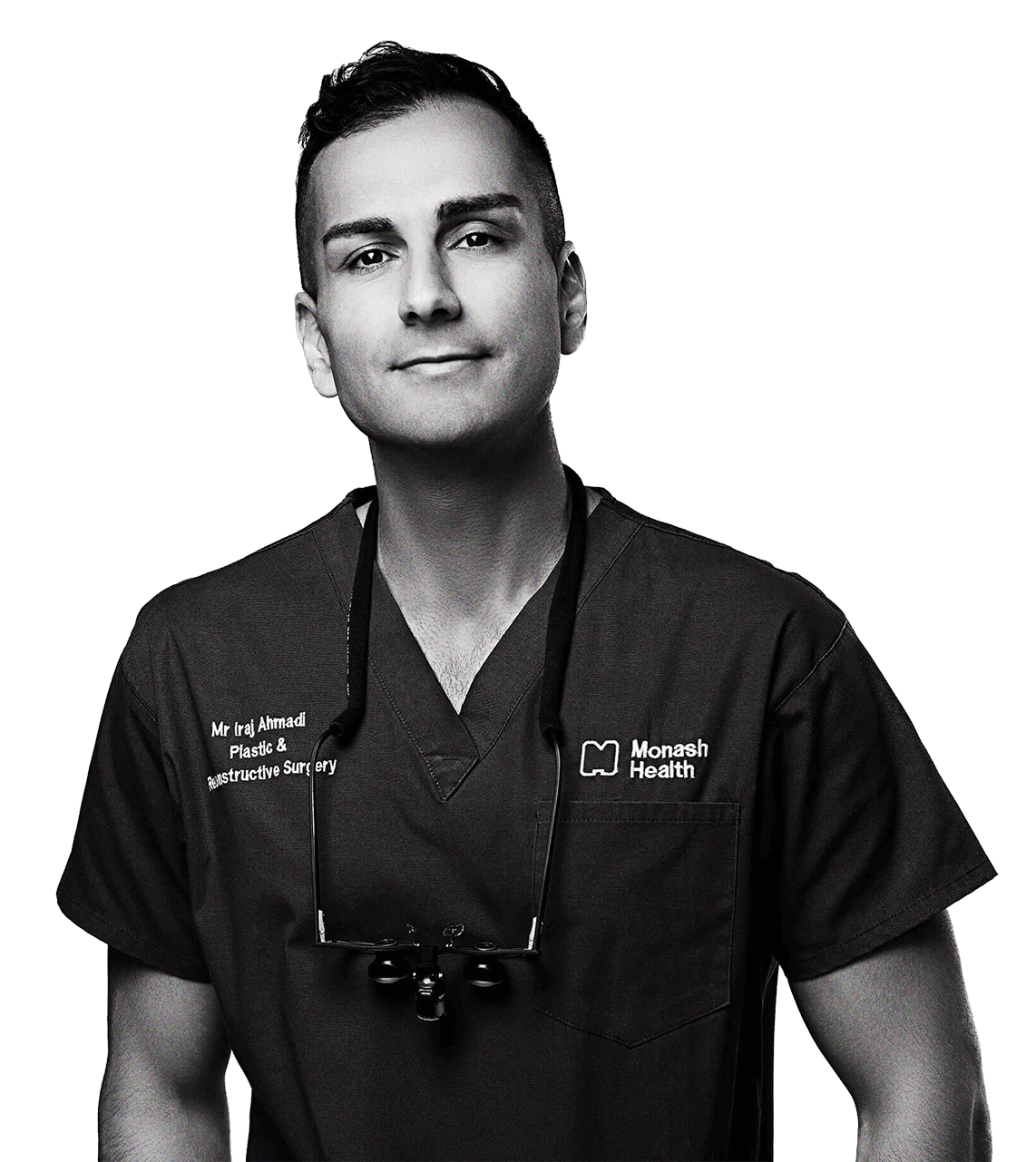
Dr Iraj Ahmadi is a specialist plastic and reconstructive surgeon whose work bridges aesthetic refinement and complex reconstructive surgery.
Alongside this work, his practice spans aesthetic surgery of the face and body as well as reconstructive surgery for cancer, trauma and complex tissue loss.
Related procedures
-

Facelift
-
Eyelid Surgery
-

Brow Lift
-

Neck Lift